
Blog
Custom software with ownership: keeping the keys while you partner
Hiring a software partner should not mean losing control. When you own the source and infrastructure, collaboration stays flexible and durable.
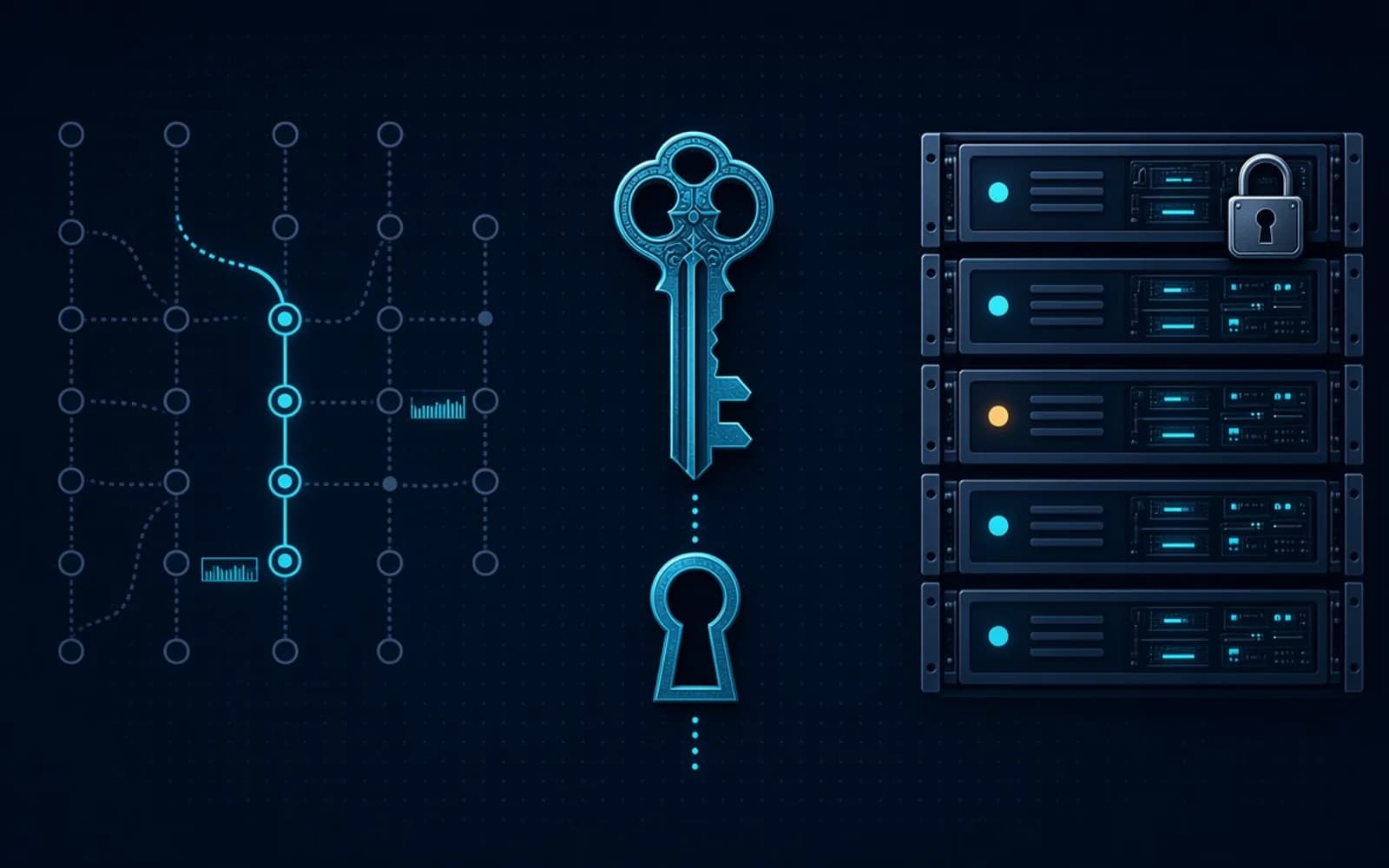
Outsourced software works best when the business gets a partner’s speed and still keeps control of the system. Owning the source code and infrastructure isn’t about being defensive. It is the base for flexible, long-term collaboration.
Four layers you should keep ownership of
The partner gets working access, the business keeps the decisions
Source code and git history
Lives in your organization, with branch protection and review, and every change is traceable.
CI/CD and secrets
Pipelines run on your company’s accounts and secrets are managed centrally.
Cloud, domain, third-party services
Hosting, DNS, payments, SMS: billing and root access belong to you.
Monitoring and operations
Logs, alerts, backups, and runbooks, ready for long-term maintenance.
Why ownership improves collaboration
When source code and infrastructure are in your name, later decisions get easier: auditing changes in production, bringing in another partner, handing over to an internal team, or negotiating maintenance around the value delivered. When ownership is postponed the opposite happens: changes are harder to audit, handover is slower, and long-term decisions are less flexible.
Settle ownership from the start
- Day one: set up your own organization and cloud account, and the partner joins with the right permissions.
- During the build: commits, deployments, and configuration all live in your workspace.
- At handover: there is a runbook covering deploy, rollback, secret rotation, and support channels.
- Afterwards: MinTech keeps supporting operations, or your internal team takes over gradually when ready.
How MinTech works
Source and cloud accounts are in your company’s name and we work inside them. When the working model changes, permissions and documentation are handed over cleanly, and you still have someone alongside you after go-live. See more on how MinTech works.
Frequently asked questions
Do we need source access from day one?+
Ideally, yes. Ongoing ownership in your organization keeps collaboration transparent and easier to extend later.
Can the partner still operate the system for us?+
Yes. They get operating access on your accounts, with a clear handoff path for when your internal team wants to take on more.