
Blog
Discovery before code: start software projects with shared clarity
Discovery helps enterprise software start on the right problem: clear scope, clear acceptance, and a shared picture between your team and your partner.
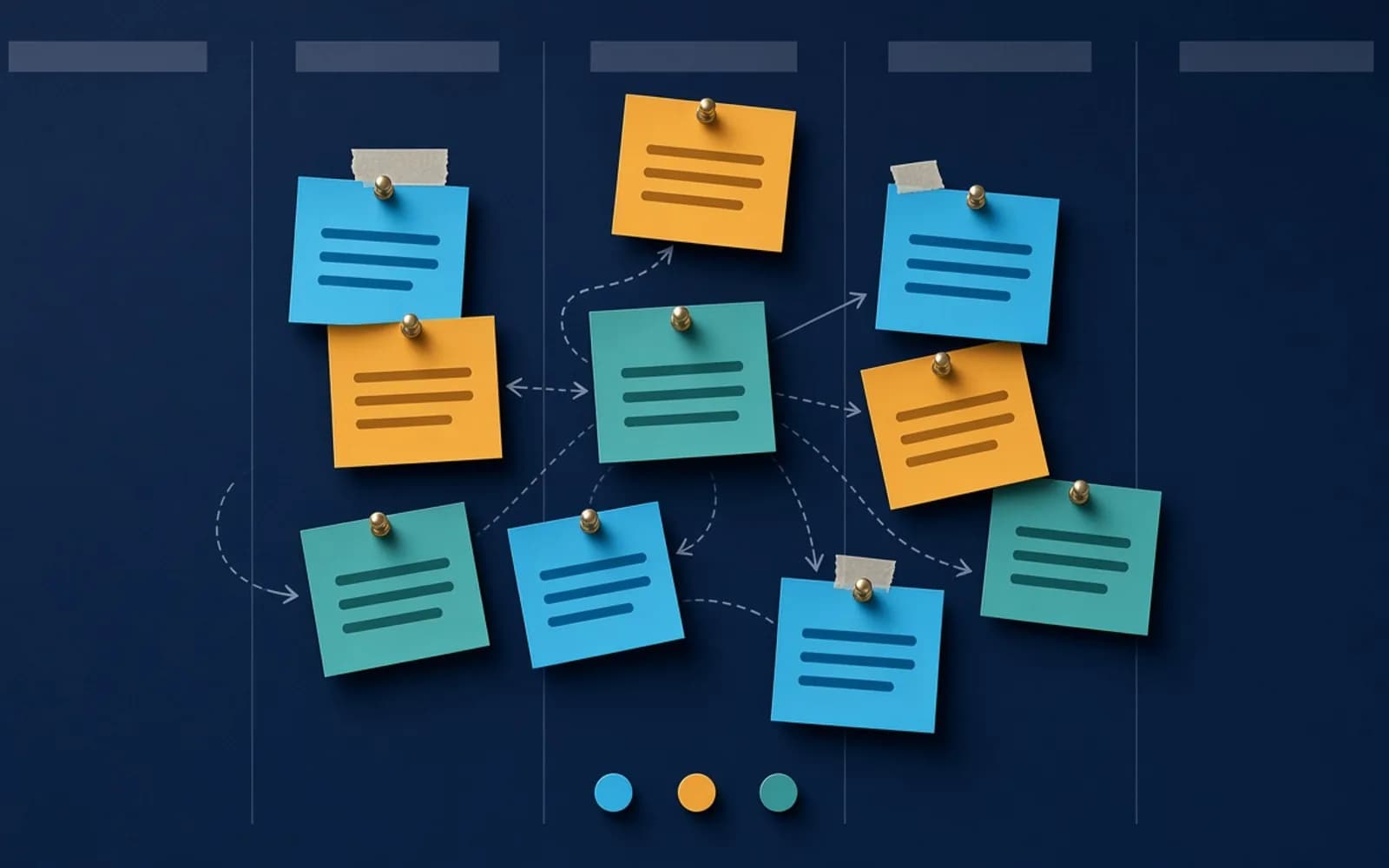
Discovery is a short phase that turns how the business really works into scope, delivery milestones, and acceptance criteria, clear enough to build against. Once it is done, writing code is the natural next step rather than a guess.
Discovery versus jumping straight in
Straight into code versus with discovery
Straight into code
- Easy to build many features with fuzzy priorities
- A polished demo may miss real operations
- Scope is hard to align across stakeholders
- Changing course later costs more
With discovery
- A first phase small enough to show value early
- Acceptance written up front, so everyone reads it the same way
- Priorities match the operational problem
- Your team and your partner share one picture
Five steps
From listening to a delivery plan
Step 1
Listen to the people doing the work
Workshops with real operators, observation of the process, and a record of constraints and critical data.
Step 2
Clarify priorities
Separate must-haves from later items and pick the main flow that creates value soonest.
Step 3
Lock the first phase
One shippable slice, with what waits listed explicitly so scope stays clear.
Step 4
Write acceptance criteria
By role: who does what, what correct data looks like, and when it counts as done.
Step 5
Plan the delivery
Build order, open assumptions, ownership of source code and infrastructure, and demo cadence.
What you have after discovery
Four short documents, enough to present internally: a problem brief (who faces what, and why it matters now), a scope map (in, out, later), a set of acceptance criteria, and a delivery plan (milestones, main risks, ownership).
MinTech works in six stages: collect, analyze, design, implement, test, operate. Discovery covers the first two.
Frequently asked questions
How long should discovery take?+
For SMEs, workshops plus the first-phase documents often take a few days to about two weeks, enough to lock acceptance before deeper build work.
Can coding start during discovery?+
Small technical experiments can run in parallel. What should be settled early is the business scope and the first phase’s acceptance criteria.